

Permaculture. Permanent culture that is always changing, always metamorphosing, always moving as only time can do. So time and space are non-different. Time and space fuse in a Permaculture design. Diversity-in-unity. A quality Permaculture design is a unified design, one that speaks relationship, connection, cooperation, wholeness. It is a landscape that is undivided and it is not a conquerable thing. It is rooted in its very root. Bill Mollison, the founder of the Permaculture system, says vehemently that it is not about what elements we place in the landscape, it is about the connections and relationships that we make.
When we fail to make even the slightest attempt to observe the landscape we miss too many opportunities. The bounty is enormous and the natural world needs no machines, nor the intruding hand of the people to make for its wellbeing. It gives and gives and gives and we do not know how to manage. Permaculture states that we must take the responsibility in our lives to make landscapes that are ecologically sound, yet economically viable.
As stated by Bill Mollison in Permaculture: A Designer’s Manual, in order for the long-term consequences of our actions to promote sustainability for future generations, we need to use “species that are native to our area or those naturalized species known to be beneficial; plan for small scale, energy efficient intensive systems rather than large scale, energy consuming extensive systems; be diverse, polycultural; increase the sum of yields: look at the total yield of the system provided by annuals, perennials, crops, trees and animals, also regard energy saved as a yield; use low energy environmental (solar, wind and water) and biological (plant and animal) systems to conserve and generate energy; bring food growing back into the towns and cities; assist people to become self reliant and promote community responsibility; reforest the earth and restore fertility to the soil; use everything at its optimum level and recycle so called wastes of any kind; see solutions, not problems.”
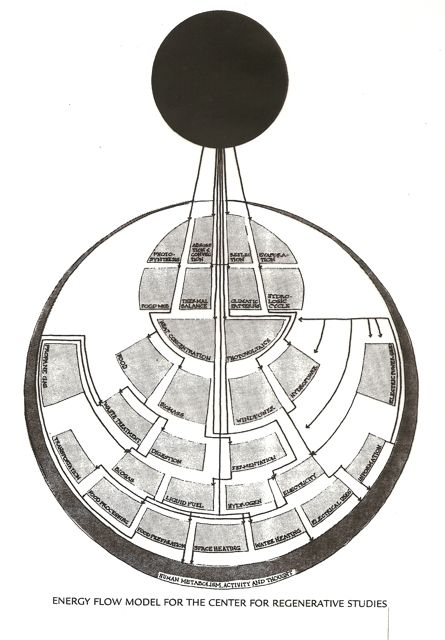
Permaculture is about whole systems, not about separate components. Because each element in a landscape or the built environment affects every other element at a site, we believe that a complete, comprehensive assessment is tantamount to develop healthy, productive, energy efficient relationships between elements for the benefit of everyone involved in day-to-day operations and life. By paying attention to all the details: topography, climate, water, wind, sun, activity nodes and corridors, buildings, machinery and tools, the waste stream, plants and animals, it enables us to make best use of what is already on the ground, and what we intend to put there. With a dynamic interaction of elements in process, and an assessment of both spatial and temporal attributes, organized around sound ecological principles, we can maximize yields and balance the landscape.
By utilizing appropriate technologies that sustain, rather than hinder and destroy the balance of nature, an ethic and attitude of care, cooperation and the need to follow nature’s pristine example will become apparent. We will learn to mimic the ecological processes within the local bioregion where we live and work, creating balanced ecosystems in their own right.
Because Permaculture postulates that we start small, and stay relatively small, with practices such as utilization of vertical space in our planning (stacking), ecologically based design, and increasing yields-not size of acreage, participants have the opportunity to design and implement a unique and comprehensive lifestyle geared to small and mid-sized land-bases.
A whole systems approach is all-inclusive. If the underlying “law of unity” is constantly at the threshold of our thinking in education, research and implementation, we will always be called to look for what brings us, and nature, together in harmony, rather than the separation from the natural world that most of the populace feels. This includes gardeners, homeowners, farmers and the like. Put simply, we have “lost touch with the land “.