
Team Four Narrative
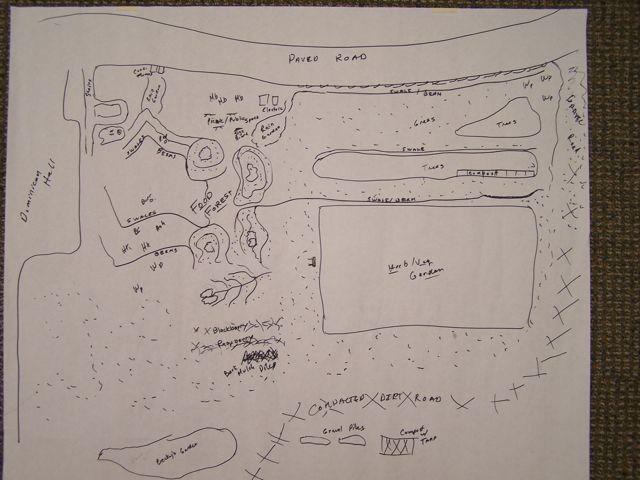
Edgewood College has tasked our team with redesigning a plot of land spanning from just south of the Eastern-most access road on campus to the landscape directly east of Dominican Hall. The main challenge of this area is to prevent erosion in the valley directly below drainage pipes from water coming from the parking lot above. Our plan is to place a rain garden directly after the pipes, place three swales on contour down the slope of the hill, and couple them with a series of berms, creating a staggered terrace to catch water. We have consulted with Team 1 on this issue, and they have assured us they are utilizing all available land resources higher on the slope to reduce the water flow that flows under the access road to our high erosion zone. We would extend the swale and berm that was made uphill from the herb and vegetable garden. Additionally, we would add a swale and berm close to the edge of the rock terrace off the main driveway. The overflow area would be a small rain garden in a low spot just below the electric boxes. This rain garden would have overflow into the food forest. Mulberry trees and a low grass and sedge meadow area would have public space and signage to welcome and introduce and inform people about what is happening in the food forest and with rain gardens and swales.
Our second major challenge is to streamline service functions to the college garden to maximize land cultivation. The compost bins are currently situated on the north side of the berm that separates our plot from the garden. We have consulted with Team 3 and are working with them to move the compost closer to the garden on the south end of the berm. This will also help Team 2’s goal and our goal of re-vegetating the access path once used to access the compost. This new vegetation, along with the existing vegetation to the north and south, will receive additional water from the planned swale dug along the south end of the access road. This swale will help saturate the area’s hard and dry soil and will begin the restoration of these lands.
The second part of our service functions involve rebuilding the main access road with permeable materials to drain water easier, reducing water runoff into high erosion areas. We will stabilize the rocks and gravel along the road with salt resistant vegetation (see plant list). The current shed is seldom used and we propose to move the shed to the west side of the garden for more efficient use of tools. The college also piles wood chips, soil, sand, and other materials on the south end of the garden for use throughout the campus. There was discussion in moving these piles to the area where the shed currently exists, but the teams agreed that since the Eastern-most, North-South trail will remain, the piles should remain in their existing locations due to aesthetic concerns. Additional surplus materials will be located at the bottom of the hill, just north of the community bike path.
There are no plans to alter Dominican Hall, except to begin water catchment off the roof for additional water resources to be used across campus. The pedestrian access, including stairwell with handicap access and sidewalk, will remain as is with existing vegetation. An additional goal is to further enhance water filtration and decrease erosion on the slope just west of Dominican Hall. Several swales and berms would be added to the downslope to catch and slow any severe rain event and surface water coming downslope of the rain garden and berms and swales just below the culverts. These berms and swales would all have overflow runoff into paths that would be swaled slightly and chipped as paths through the food forest. across the eroded area directly to the east in the swale configuration previously discussed. Water will be held on the landscape and directed into Becky’s Garden at the southern border of our plot. To the east and south of this eroded area, several fruit guilds will be planted to reduce runoff and provide an area for social gathering for students, including garden classes, wilderness skills training, and meditation.